PostPub
PostPub is a dashboard that makes research retractions legible. It sits on top of the Retraction Watch database and turns it into something you can actually browse — retraction rates by country and by institution, tracked over time, with the stated reason for each retraction classified against an established taxonomy of misconduct.
The premise is that retractions are a lagging but honest signal of research misconduct, and that the signal is only useful if somebody watches it continuously. A single study goes stale the year it publishes; a dashboard doesn't. It's built for journalists, policymakers, and librarians — people who need to ask "where is this getting worse?" and get an answer without doing the data engineering first.
§The dashboard
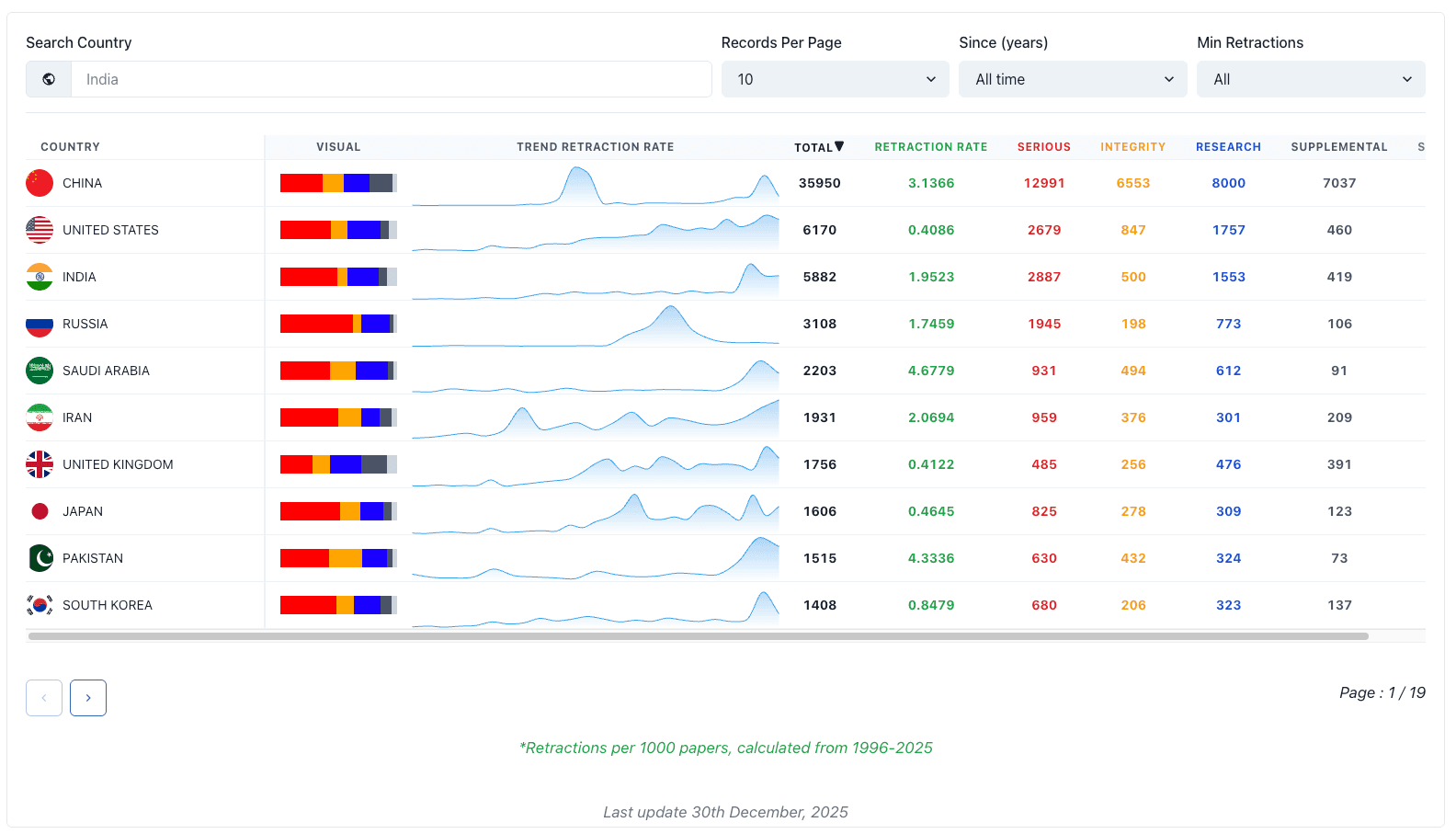
The interesting column isn't the total — it's the rate. Ranked by raw count, the list reads like a ranking of how much science a country publishes: China first, then the United States, then India. Normalised to retractions per 1,000 papers, the order changes completely. Saudi Arabia sits near the top at 4.68 while the United States drops to 0.41, an order of magnitude lower on a far larger body of work.
That gap is the whole argument for the tool. Raw counts flatter big publishers and punish productive ones; rates surface where the problem is actually concentrated. Each row also splits retractions by reason — serious misconduct, integrity, research error, supplemental — so a high number can be read for what caused it rather than treated as one undifferentiated score.
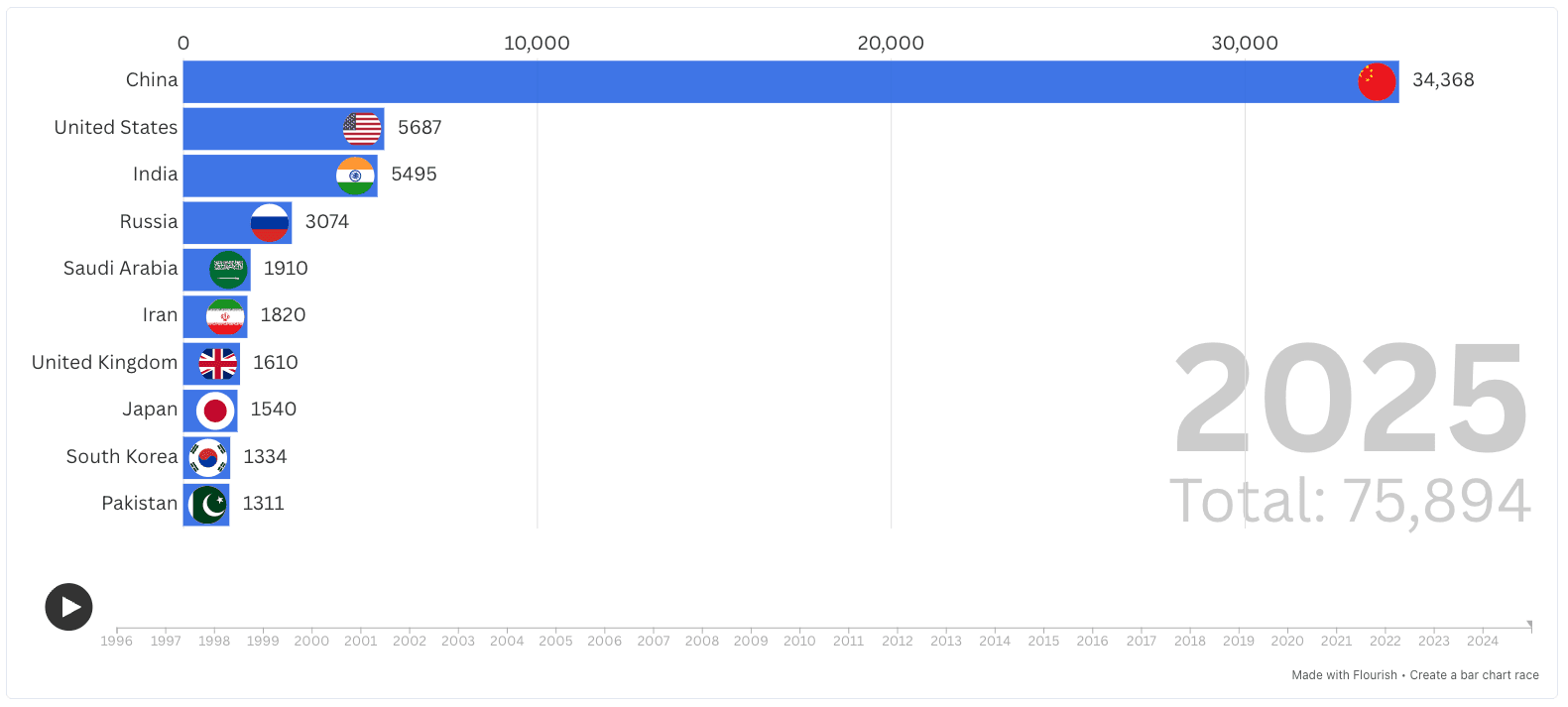
Played over time, the shape of the problem is growth. The cumulative count passes 75,000 retractions by 2025, and most of that curve steepens in the last decade — which is either evidence that misconduct is rising or evidence that detection is finally catching up. Probably both.
§Research
The work is published as A Dashboard to Visualize Retraction Statistics, presented at ISSI 2025 and written with Achal Agrawal (India Research Watch) and Moumita Koley (DST-Centre for Policy Research, IISc).
The institute-wise view was highlighted in Nature, in Richard Van Noorden's reporting on which universities carry the most retracted articles, for its role in visualizing institute-wise retraction trends globally.
§Funding
The work is funded by a seed grant from the Open Research Funders Group and by a Digital Science Catalyst Grant, awarded in the 2024 round for work on research integrity.